Everywhere You Have Ever Been: The Hidden Architecture of Mobile Location Surveillance
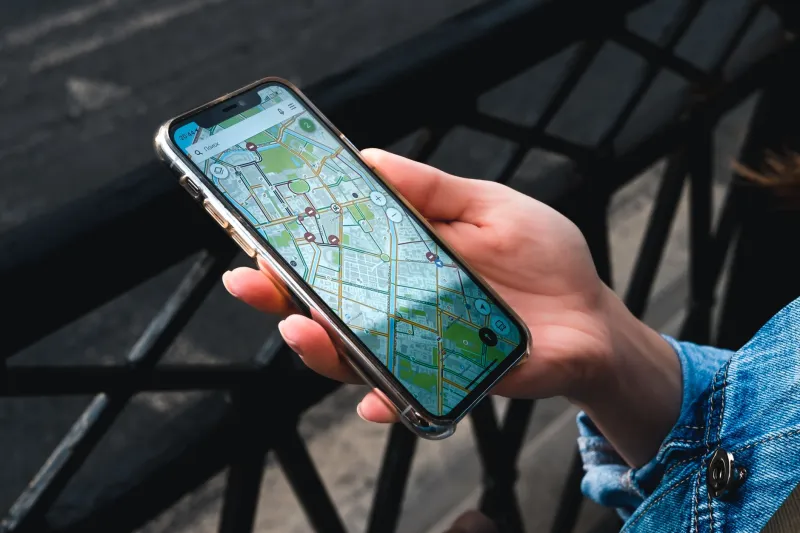
Most Americans carry a device in their pocket that knows, with remarkable precision, where they sleep, where they worship, where they seek medical care, and whom they visit at two in the morning. That device is not a government-issued tracker. It is the smartphone you voluntarily purchased, updated, and granted permissions to without reading the fine print. The location data it generates has become one of the most commercially valuable — and personally revealing — categories of information in the modern surveillance economy.
Understanding the full scope of mobile location tracking requires looking beyond the obvious. GPS is merely the entry point.
Beyond GPS: The Multi-Layered Mechanics of Location Harvesting
When most people think about location tracking, they picture the satellite-based Global Positioning System. GPS is indeed powerful, but it represents only one layer of a much deeper technical infrastructure. Modern smartphones triangulate your position using a combination of GPS signals, nearby Wi-Fi network identifiers, cellular tower data, and Bluetooth beacon proximity. This multi-source approach means that even when GPS is disabled, your device continues broadcasting location-relevant signals to any application with sufficient permissions.
Wi-Fi positioning, for instance, allows apps to infer your location by scanning for nearby networks and cross-referencing them against massive databases of known access points. Cellular triangulation operates similarly, using the signal strength of surrounding towers to estimate position within a few hundred meters — or much more precisely in dense urban environments. Bluetooth beacons installed in retail stores, airports, and stadiums go further still, enabling indoor positioning accurate enough to identify which product aisle you were standing in.
The result is a layered surveillance architecture that functions even in environments where you believe your location is private.
The App Economy's Quiet Bargain
The mechanism by which this data reaches the commercial market is, in most cases, entirely legal. When you install a weather application, a flashlight utility, a fitness tracker, or a retail coupon aggregator, you are frequently presented with a permission request for location access. Many users grant this access without hesitation, either because the request seems reasonable for the app's stated purpose or because declining it means losing functionality.
What the permission dialogue rarely communicates is that the data collected may be shared with third-party advertising networks, analytics firms, and data brokers operating in the background. A fitness app that tracks your morning run is simultaneously logging the neighborhoods you pass through, the frequency of your visits to specific locations, and the hours during which you are away from home. That information, aggregated across millions of users, becomes a product sold to marketers, insurers, political campaigns, and commercial intelligence firms.
The legal framework governing this practice in the United States remains fragmented. Unlike the European Union's General Data Protection Regulation, which imposes strict consent requirements, U.S. federal law does not comprehensively regulate the commercial sale of location data. The California Consumer Privacy Act and its successor, the California Privacy Rights Act, provide some protections for California residents, but the majority of Americans operate in a regulatory environment that permits broad commercial exploitation of their movement histories.
What a Location History Actually Reveals
The sensitivity of location data is frequently underestimated. A single day's worth of movement records can reveal your employer, your physician, your place of worship, your romantic relationships, your political affiliations, and your mental health status. Researchers and journalists have repeatedly demonstrated that so-called "anonymized" location datasets can be re-identified with minimal effort — a few known data points are sufficient to isolate a specific individual within a large dataset.
In 2018, The New York Times obtained a dataset containing the location histories of more than twelve million Americans and demonstrated that individuals including a senior government official could be identified and tracked with precision. More recently, reporting by Vice and others revealed that data brokers were selling location histories tied to visits to abortion clinics, addiction treatment centers, and immigration offices — data with direct implications for personal safety and legal exposure.
For the privacy-conscious American, the uncomfortable reality is that their location history may already exist in dozens of commercial databases, accessible to entities they have never heard of and subject to legal demands from law enforcement agencies operating under standards far lower than a traditional warrant.
The Broker Pipeline: From Your Phone to the Open Market
The path from your smartphone to a commercial data broker is rarely direct, but it is well-established. Advertising software development kits embedded within apps collect location pings in the background and transmit them to data aggregators. Those aggregators compile movement histories, assign persistent identifiers, and sell enriched profiles to downstream buyers. By the time your location data reaches its final commercial destination, it may have passed through four or five intermediary companies, each adding layers of inference and behavioral annotation.
This pipeline operates largely outside public awareness. The apps involved range from games to navigation tools to utility applications with no obvious connection to advertising. Many are free — and the location data they harvest is, effectively, the price of admission.
Practical Steps Toward Reclaiming Your Movement Data
The architecture of mobile location surveillance is formidable, but it is not impenetrable. Several concrete measures can meaningfully reduce your exposure.
Audit your app permissions rigorously. On both iOS and Android, you can review which applications have been granted location access and under what conditions. Revoke access for any application that does not have a clear, immediate need for your physical position. Pay particular attention to apps requesting "always on" location access — a designation that enables background tracking even when the app is not in active use.
Prefer "while using" over persistent access. Where location permission is genuinely necessary, restrict it to active use only. This eliminates the background pinging that feeds the commercial data pipeline.
Disable Wi-Fi and Bluetooth scanning when not in use. Both Android and iOS allow these radios to scan for networks and devices even when you are not actively connected to anything. Disabling this background scanning limits the data available to location inference engines.
Use a reputable VPN consistently. While a VPN does not mask your GPS coordinates, it does obscure your IP address — a secondary location signal that advertisers and trackers use to supplement device-based location data. Routing your traffic through an encrypted tunnel prevents your internet service provider and network-level observers from correlating your browsing activity with your physical whereabouts.
Be selective about fitness and health applications. These categories are among the most aggressive location data collectors and are frequently integrated with advertising networks. Consider whether the convenience justifies the exposure, and review the privacy policy of any health-adjacent application before granting it persistent access to your movements.
Reset your advertising identifier periodically. Both major mobile operating systems assign a resettable advertising ID to your device. Resetting this identifier periodically disrupts the continuity of the behavioral profile being assembled around your device, though it does not eliminate tracking entirely.
The Larger Stakes
Location data is not a trivial commercial byproduct. It is a precise, persistent record of the choices, relationships, and vulnerabilities that define a human life. The corporations that collect and sell it are not neutral custodians — they are participants in an economy that profits from surveillance and that operates, in the United States, with minimal accountability.
Reclaiming control over your movement data requires sustained attention and deliberate action. The permissions you granted years ago remain active. The data already collected continues to circulate. But the decisions you make today — about which apps to trust, which permissions to grant, and how to route your digital traffic — determine the shape of your exposure going forward.
Privacy is not a feature. It is a practice. And it begins with understanding exactly what your phone has been quietly telling the world about you.