Written in Your Bones: How the Rhythm of Your Keystrokes Builds an Identity No Mask Can Hide
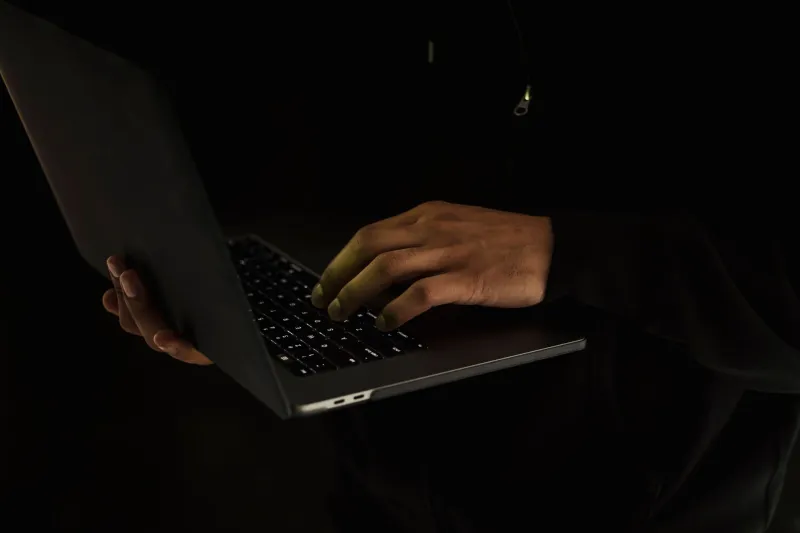
You change your passwords regularly. You route your traffic through a VPN. You clear your cookies, rotate your browser, and take every precaution the standard privacy playbook recommends. And yet, the moment your fingers touch a keyboard, something deeply personal escapes into the digital ether—something no tool in your current arsenal is designed to stop.
Keystroke dynamics, sometimes called typing biometrics, is the science of measuring the unique rhythmic patterns embedded in the way a person types. The intervals between keystrokes, the duration each key is held, the subtle pressure variations, the characteristic hesitations before punctuation—taken together, these metrics form a profile as distinctive as a fingerprint, and far more difficult to consciously alter.
What was once an academic curiosity confined to university research papers has become a mature, commercially deployed identification technology. Its presence now spans banking platforms, enterprise security systems, law enforcement databases, and—perhaps most unsettlingly—the behavioral analytics pipelines of digital advertisers.
The Mechanics of an Invisible Signature
To understand why this form of identification is so persistent, it helps to understand what is actually being measured. Keystroke dynamics systems capture two primary data points: dwell time, the duration for which a key is physically depressed, and flight time, the interval between releasing one key and pressing the next. From these two variables, algorithms extract a surprisingly rich portrait of the individual typist.
The patterns are not arbitrary. They emerge from the interaction between a person's neurological processing speed, fine motor habits developed over years of typing, the physical geometry of their hands, and even their emotional state at the time of input. A person under stress types differently than a relaxed one, but the underlying signature—the structural rhythm—remains consistent enough for identification purposes.
Modern machine learning models trained on these patterns can identify a known user with accuracy rates exceeding 99 percent in controlled conditions. More critically, they can flag an unknown user—someone whose typing pattern does not match the profile on file—with comparable reliability. This dual capability makes the technology attractive both for authentication and for surveillance.
Who Is Collecting This Data and Why
The honest answer is that the list is longer than most Americans would find comfortable.
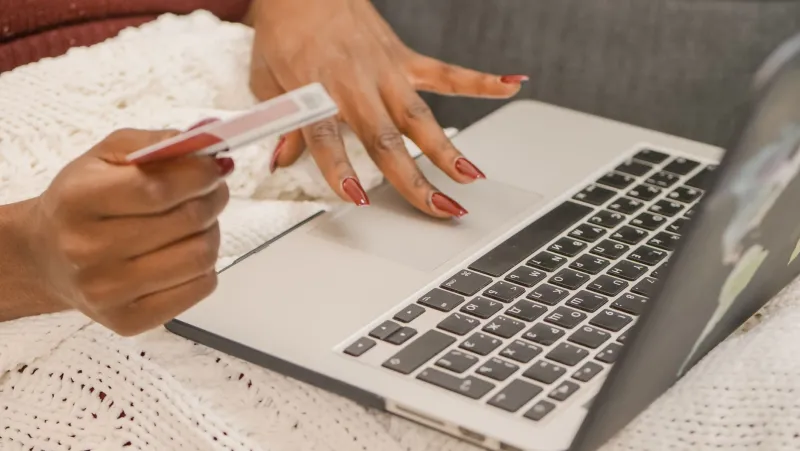
Financial institutions have been among the earliest and most aggressive adopters. Major banks and payment processors now use continuous keystroke authentication to verify that the person completing a transaction is the same person who initially logged in. This is marketed as fraud prevention, and to a degree it is. But it also means that every session on a banking platform generates a behavioral record that persists indefinitely.
Enterprise security vendors sell keystroke dynamics as an insider threat detection tool. Employers can configure systems to alert security teams when a workstation is being used by someone whose typing pattern deviates from the registered employee's profile. The implications for remote workers—who may share a device with a family member or simply type differently when fatigued—are worth considering carefully.
Law enforcement agencies have shown documented interest in keystroke analysis as an investigative tool. In cases involving anonymous online communications, the typing patterns embedded in written content—even when the author believes they are fully anonymous—can be compared against known samples to establish authorship with a degree of statistical confidence that courts have begun to find persuasive.
Advertising technology firms represent perhaps the most diffuse and underappreciated deployment. Behavioral analytics companies have developed browser-based scripts capable of capturing keystroke timing data without explicit disclosure to the user. When combined with other signals—mouse movement, scroll behavior, device orientation—these patterns contribute to a persistent cross-site identity profile that survives cookie deletion, browser changes, and even device switching when the underlying typing signature remains consistent.
The Cross-Device Problem
One of the most significant developments in this field is the demonstrated ability to identify individuals across different devices and input methods. Early keystroke dynamics research assumed a fixed hardware environment. A person typing on a laptop keyboard produces a different raw signal than the same person typing on a smartphone touchscreen or an external mechanical keyboard.
Recent research has addressed this limitation by modeling the underlying neuromotor patterns rather than the device-specific signals. In other words, the algorithms have learned to separate the noise introduced by hardware variation from the consistent rhythmic signature produced by the human nervous system. The result is a biometric that travels with you regardless of what you are typing on.
For privacy-conscious individuals who rotate devices as a precautionary measure, this development fundamentally undermines the strategy. The assumption that a new device equals a new identity no longer holds when the identifying information is embedded in how you physically interact with any device.
Why Conventional Privacy Tools Fall Short
A VPN masks your IP address and encrypts your traffic in transit. A privacy-focused browser blocks third-party cookies and fingerprinting scripts. These are valuable protections, and AnoniumVPN advocates for their use without reservation. But neither category of tool was designed to address biometric behavioral data generated at the application layer.
Keystroke data is captured by JavaScript running within the browser session itself, or by the application you are interacting with directly. By the time that data would even theoretically encounter your VPN's encryption layer, it has already been collected by the entity running the page. Encryption protects data in transit from third-party interception. It does not prevent the first party—the website or application—from harvesting whatever your browser's scripting environment makes available.
Some browser extensions claim to introduce artificial noise into keystroke timing data, randomizing the intervals slightly to defeat pattern recognition. The theoretical basis is sound, but implementation varies widely, and sophisticated systems trained on large datasets have shown some resilience to basic noise injection. This remains an active area of research rather than a solved problem.
What Meaningful Protection Requires
Addressing keystroke dynamics as a privacy threat requires accepting an uncomfortable premise: some forms of biometric identification cannot be fully neutralized by software alone. The pattern originates in your neurology. You cannot install a patch for your nervous system.
What you can do is reduce the surface area of exposure. Limiting interaction with platforms known to deploy behavioral analytics, using text expansion tools or autofill systems that substitute automated keystrokes for manual input in high-risk environments, and staying informed about which applications your employer or service providers have licensed for behavioral monitoring are all practical starting points.
Legislative pressure is another lever. The United States currently lacks comprehensive federal biometric privacy law, though states including Illinois, Texas, and Washington have enacted statutes with varying degrees of protection for biometric identifiers. Whether keystroke dynamics data qualifies as a biometric identifier under these frameworks is a live legal question that advocacy organizations are actively litigating.
The Deeper Implication
What keystroke dynamics reveals is not merely a new tracking technique to be added to an ever-growing list. It reveals something more fundamental about the direction of identity surveillance: the most durable identifiers are the ones you cannot choose to leave at home.
Your IP address can be masked. Your cookies can be cleared. Your device can be replaced. But the rhythm encoded in the way your fingers have learned to move across a keyboard over decades of practice is not a credential you can revoke. It is, in the most literal sense, written into how your body moves through the world.
Privacy in this environment demands more than tools. It demands a clear-eyed understanding of what is being measured, who is doing the measuring, and what the absence of meaningful federal regulation permits them to do with what they find.