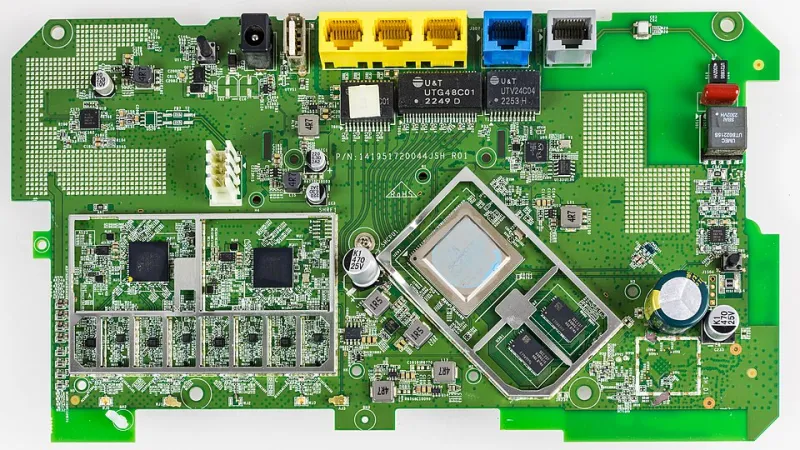
Always Listening: The Unsettling Intelligence Hidden Inside Your Smart Speaker

Photo: smart speaker glowing microphone home privacy surveillance, via indianeconomyandmarket.com
Your smart speaker sits quietly on the kitchen counter, waiting. But waiting is not all it does. Behind the reassuring glow of a muted microphone indicator lies a data collection apparatus that rivals the most sophisticated surveillance tools ever built—one that you invited into your home and plugged into the wall yourself.
Amazon's Alexa, Google Home, and Apple's HomePod have become fixtures in tens of millions of American households. According to Statista, more than 35 percent of U.S. adults owned a smart speaker as of 2023. The pitch is irresistible: hands-free convenience, instant answers, seamless smart home control. What the marketing rarely addresses is the transaction occurring beneath the surface—the continuous exchange of your most intimate domestic moments for the privilege of dimming the lights without standing up.
The Wake Word Is Just the Beginning
Every major smart speaker manufacturer insists that audio recording begins only after the device detects its designated wake word—"Alexa," "Hey Google," or "Hey Siri." This is technically accurate, and also deeply misleading.
Researchers at Northeastern University and Imperial College London published findings demonstrating that smart speakers misfire with alarming regularity. Casual conversation, television dialogue, and even certain song lyrics can trigger unintended recordings. In practice, this means your device may be capturing audio—and transmitting it to corporate servers—dozens of times each day without your knowledge or consent.
When those recordings reach the cloud, they do not simply evaporate. Amazon has acknowledged that human reviewers listen to a subset of Alexa interactions to improve the system's accuracy. Google operates a comparable review program. These are not anonymous data points. Recordings are often tied to account identifiers, device locations, and behavioral profiles that have been accumulating since the moment you activated the device.
Consider what those recordings might contain. A conversation with a spouse about a cancer diagnosis. A child asking questions about a school bully. A discussion of financial hardship during a difficult month. Your smart speaker registers all of it with the same indifferent efficiency.
What Your Doctor Doesn't Know—But Alexa Might
Health data occupies a uniquely sensitive category under U.S. law. The Health Insurance Portability and Accountability Act (HIPAA) imposes strict limits on how medical providers can share your information. Smart speaker manufacturers, however, are not covered entities under HIPAA. The intimate health details you discuss within earshot of these devices exist in a regulatory gray zone that offers you far less protection than a conversation in your physician's office.
Consider the asymmetry. When you tell your doctor about a persistent cough, that information is governed by federal statute. When you ask Alexa to remind you to take your blood pressure medication—or when your voice simply carries that conversation into the room where the device is stationed—the resulting data may be stored, analyzed, and potentially shared with third-party developers through the device's skills and integrations ecosystem.
Amazon's Alexa Skills Kit allows thousands of third-party applications to access the platform. The privacy policies governing those individual skills vary enormously, and few users read them. The result is a fragmented data landscape in which sensitive personal information can flow outward through channels that the average consumer has never considered.
The Deletion Illusion
All three major platforms provide users with some mechanism to review and delete recorded interactions. Amazon's Alexa Privacy Dashboard, Google's My Activity portal, and Apple's Siri history settings each allow users to purge their recorded audio. This is presented as meaningful control. The reality is more complicated.
Deleting a recording from the consumer-facing interface does not guarantee its removal from every system in which it may reside. Derivative data—the inferences, behavioral patterns, and metadata extracted from your recordings before deletion—may persist independently. A 2020 investigation by the Electronic Privacy Information Center found significant ambiguity in how major tech companies define "deletion" across their internal infrastructure.
Furthermore, voice data has commercial value that extends beyond the immediate interaction. The behavioral fingerprint your speech patterns create—your cadence, vocabulary, emotional register, and the timing of your requests—contributes to advertising profiles that can be leveraged across platforms. Amazon, it bears remembering, is also one of the largest digital advertising networks in the United States.
Financial Conversations and the Ambient Microphone
Beyond health, financial conversations represent another category of particular sensitivity. American households routinely discuss bills, debt, investment decisions, and income within the same spaces where smart speakers operate. While no major manufacturer has publicly acknowledged using financial conversation content for targeted advertising, the structural incentives are unmistakable.
Advertising technology operates on inference and correlation. A household that frequently asks about mortgage refinancing, budget meal planning, or credit card interest rates generates behavioral signals that are commercially valuable regardless of whether the specific words are directly harvested. The ambient presence of a listening device recalibrates what privacy in the home actually means.
Reclaiming Your Domestic Privacy
The goal is not necessarily to discard these devices entirely, though that remains the most complete solution. For users unwilling to part with the convenience, several meaningful steps can reduce exposure.
Audit your skills and integrations. Review every third-party application connected to your smart speaker account and revoke access for any service you do not actively use. Each connection represents a potential data pathway.
Use the physical mute function deliberately. The hardware mute button—which disconnects the microphone at the circuit level rather than through software—provides a more reliable barrier than voice-activated privacy settings. Make muting a default habit during sensitive conversations.
Review and delete your voice history regularly. While deletion is imperfect, maintaining a shorter data retention window limits the historical record available for analysis. Configure automatic deletion settings where the platform offers them.
Evaluate device placement. Removing smart speakers from bedrooms, bathrooms, and home offices—spaces where sensitive conversations are most likely to occur—reduces the scope of ambient collection without eliminating the device's utility in common areas.
Understand the network layer. A VPN does not prevent a smart speaker from recording audio, but it does mask the IP address from which that data is transmitted, reducing the geographic and identity metadata attached to your device's communications.
The convenience of voice-activated technology is genuine. So is its cost. The question every American household must answer is not whether that trade-off exists, but whether they are making it consciously—or simply by default.