Before the Lock Clicks: How DNS Requests Betray Your Browsing Life in Plain Sight

There is a moment—invisible to most users, lasting only milliseconds—that happens before you see any webpage, before any padlock icon appears in your browser bar, and before your VPN has any chance to act. In that moment, your device sends a small but extraordinarily revealing message out into the open internet. It announces, in plain text, the name of every website you intend to visit.
This is the Domain Name System, commonly known as DNS. And for the overwhelming majority of Americans browsing the web today, it operates as an unencrypted confession that runs quietly beneath every session, every search, and every private inquiry they believe they have shielded.
What DNS Actually Does—and Why It Was Never Built for Privacy
Think of DNS as the internet's phone book. When you type a website address into your browser, your computer does not inherently know where that site lives on the global network. It knows only the human-readable name you entered. To find the actual numerical address—the IP address—that corresponds to that name, your device reaches out to a DNS resolver, typically operated by your internet service provider.
That resolver looks up the answer and sends it back. Your browser then connects to the correct server, and the page begins to load. The entire exchange takes place in a fraction of a second, which is precisely why most users never think about it.
The critical problem is that this lookup, in its traditional form, travels across the network without any encryption whatsoever. It is sent in plain text. Anyone positioned between your device and that DNS resolver—your ISP, a network administrator, a surveillance apparatus, or an attacker on the same public WiFi network—can read every single query you generate. Not the content of the pages you visit. Not your passwords. But the names of every domain you request, timestamped and logged in sequence.
For privacy purposes, that record is devastating. A chronological list of the domains you query maps your medical concerns, your financial anxieties, your political sympathies, your personal relationships, and your private curiosities with a precision that most people would find deeply unsettling.
Why HTTPS Does Not Solve This Problem
A common and understandable misconception is that the presence of HTTPS—the encrypted protocol that protects the data traveling between your browser and a website—resolves the DNS exposure problem. It does not.
HTTPS encrypts the content of your communication with a server. It does not encrypt the DNS query that preceded the connection. By the time your browser establishes its secure session with a website, your resolver has already received, processed, and potentially logged the domain name you requested. The padlock icon in your browser confirms that your data in transit is protected. It says nothing about the directory inquiry that happened before the connection was even initiated.
This distinction matters enormously. You may be browsing a sensitive health information site over HTTPS, confident that no one can read what you are viewing. But your ISP's DNS logs already reflect that you visited that domain at a specific time on a specific date. That record may be retained, sold to data brokers under current U.S. regulatory frameworks, or compelled by legal process.
The VPN Complication: DNS Leaks
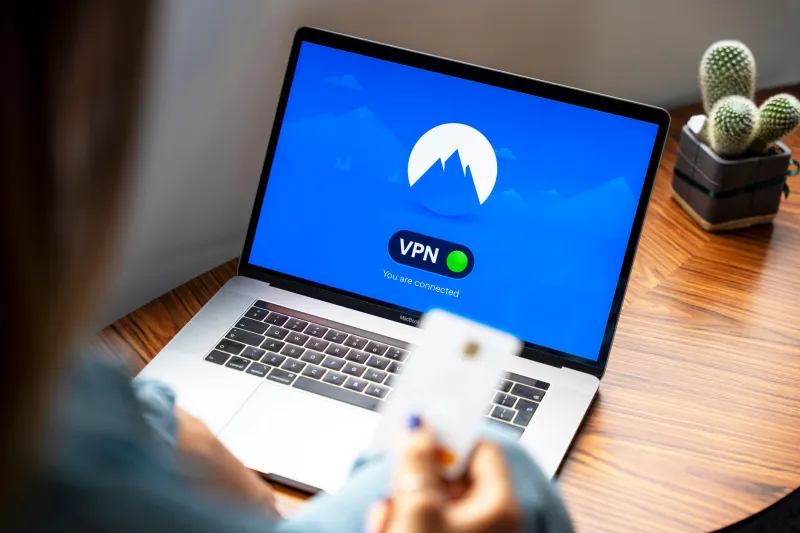
Users who employ a VPN service often believe they have addressed this vulnerability. In principle, a properly configured VPN should route all DNS queries through an encrypted tunnel to a resolver operated by the VPN provider, rather than through the user's ISP. This would, in theory, prevent the ISP from observing which domains a user queries.
In practice, however, a significant number of VPN implementations suffer from what the security community calls a DNS leak. This occurs when a device, due to misconfiguration, operating system behavior, or software conflicts, sends DNS queries outside the encrypted tunnel—directly to the default resolver, typically the ISP's own servers—even while the VPN connection is active.
The result is a user who believes they are invisible but is, in fact, broadcasting their browsing intentions to exactly the entity they were trying to avoid. DNS leak testing tools are freely available, and users who have never run one on their current VPN setup may find the results instructive.
DNS-over-HTTPS: Encryption at the Query Level
The most widely adopted technical solution to unencrypted DNS is a protocol called DNS-over-HTTPS, abbreviated as DoH. Rather than sending DNS queries as plain-text UDP packets—the traditional method—DoH wraps each query inside an encrypted HTTPS connection. To any observer on the network, the DNS traffic becomes indistinguishable from ordinary encrypted web traffic.
Major browsers, including Firefox and Chrome, now support DoH natively, and both can be configured to route DNS queries through specific encrypted resolvers rather than the system default. Mozilla, for instance, routes Firefox DoH queries through Cloudflare's 1.1.1.1 resolver by default in the United States, though users may substitute any compatible provider.
A closely related protocol, DNS-over-TLS (DoT), accomplishes a similar goal through a dedicated encrypted channel rather than piggybacking on HTTPS. Both approaches meaningfully reduce the exposure created by traditional DNS, though they shift trust from the ISP to whichever resolver the user selects. Choosing a resolver with a credible, independently audited no-logging policy therefore becomes a consequential decision.
Selecting an Encrypted DNS Provider
Not all encrypted DNS resolvers are equivalent from a privacy standpoint. Several considerations bear examination when selecting one.
First, logging policy. A resolver that encrypts your queries but retains detailed logs of them provides meaningfully less protection than one that commits to a genuine no-logs architecture. Look for providers whose policies have been subjected to third-party audits rather than relying solely on self-attestation.
Second, jurisdiction. Where a resolver operates determines which legal frameworks govern data requests made to it. U.S.-based resolvers operate under domestic surveillance statutes. Providers headquartered in jurisdictions with stronger privacy protections may present a different risk profile.
Third, integration with your VPN. A VPN service that handles DNS resolution internally—routing all queries through its own encrypted infrastructure without relying on third-party resolvers—offers a more unified and verifiable privacy architecture than one that leaves DNS handling to the user's operating system defaults.
Practical Steps Worth Taking Now
For users who want to address DNS exposure concretely, the path forward involves several overlapping measures. Enable DoH within your browser settings and select a resolver with a documented no-logs commitment. Run a DNS leak test while your VPN is active to confirm that queries are routing through the tunnel rather than escaping to your ISP. If your VPN client offers a DNS leak protection feature, verify that it is enabled and functioning.
For those willing to go further, configuring DNS-over-HTTPS or DNS-over-TLS at the operating system level—rather than only within a single browser—ensures that all applications on the device benefit from encrypted DNS resolution, not merely the browser where the setting was toggled.
The internet's foundational architecture was designed for functionality, not for privacy. DNS is among the most vivid illustrations of that original design philosophy. The good news is that the tools to address it exist, are accessible to ordinary users, and require no specialized technical background to implement. The less comfortable news is that until those steps are taken, every website name you query travels across the network in plain view—announced before the lock ever clicks into place.